Showing posts with label open access publishers. Show all posts

Saturday, October 17, 2020

Lupinepublishers|Palliative Care for Patients with Advanced Cancer


  Lupine Publishers | Journal of Health Research and Reviews

Mini Review

The diagnosis of cancer or other serious diseases causes a great impact to patients and their families. As the disease progresses and the healing possibilities are exhausted, invalidating symptoms may appear as well as innumerable problems that deserve attention and care, as they affect the quality of life of the patient. It is part of the treatment to accompany our patients and their families through the whole disease from the medical knowledge, empathizing with the patient, in order to offer the necessary resources to go through the process. It is necessary to have a qualified team to cover all the affected areas in it.

What is Palliative Care?

Palliative care is part of a comprehensive treatment for the care of discomfort, physical, mental and emotional symptoms, of all serious and chronic diseases, and of what is important in the life of the patient and his family. They do not replace the primary treatment, but contribute to it. Its goal is to prevent, alleviate suffering, improve their quality of life, and listen to the particular needs of the patient and their environment. The objective of palliative care is to treat the pressing symptoms such as pain, breathing difficulties or nausea and anguish, among others. To provide full and active assistance by an interdisciplinary team, to patients and their environment, when there is no chance of cure.

How is the Treatment?

Palliative care provides support to the patient and his family and can improve communication between him and his doctors / social work, allowing him to include his particular needs in the process to travel.

Palliative Care Offers

Specialized treatment to relieve pain and other symptoms as much as possible.

An open dialogue about therapeutic options, which include the treatment of your disease and the control of symptoms. Emotional support for the patient and his family. New research shows that patients who receive this type of care say they have an improvement in:

a) Pain and other pressing symptoms, such as nausea, breathing problems, stress, etc.

b) Communication with your doctors / health system and family.

c) Emotional support

d) Quality of life

Other Studies also Show that Palliative Care

a) They ensure that attention is focused more on the patient’s wishes.

b) They meet the emotional and spiritual needs of patients.

c) When should it start?

d) Many people who live with diseases such as cancer, heart disease, COPD, kidney failure, or AIDS, among others, suffer physical symptoms and emotional discomfort related to their illnesses. Sometimes, these symptoms have to do with the medical treatments they receive.

Palliative Care Can be Considered in the Following Cases

a) Suffer pain or other symptoms because of any serious illness.

b) Feel physical or emotional pain that is NOT controlled.

c) He needs help to understand his situation and coordinate his attention.

d) It is never too early to start receiving palliative care, the patient should receive them as soon as they are needed. In fact, palliative care is given at the same time as the r rest of the treatments for their disease and do not depend on the progress of it. There is no reason to wait, when they can be contacted early, the symptoms get better control and the process proceeds with greater comfort.

Serious illnesses and their treatments can cause great fatigue, anxiety and depression. The palliative care teams know that pain and other symptoms affect the quality of life and can take away from the patient the energy or motivation to continue doing the things that they like. In addition, they know that the stress they are suffering can profoundly affect their family. Our professionals can help you cope with this difficult experience by participating in finding the best way to care for and accompany you. Not all oncology services offer palliative treatments; Generally, because of a cost issue in Health that the Institutions intend to ignore. However, improve the quality of life of the terminal patient and his family. It is part of complementing a treatment, perhaps in a way that we do not like.

For more Lupine Publishers Open Access Journals Please visit our website:
http://lupinepublishers.us/
For more Research and Reviews on Healthcare articles Please Click Here:
https://lupinepublishers.com/research-and-reviews-journal/

To Know More About Open Access Publishers Please Click on Lupine Publishers

Follow on Linkedin : https://www.linkedin.com/company/lupinepublishers

Follow on Twitter   :  https://twitter.com/lupine_online


Friday, July 17, 2020

Lupine Publishers|Increased A1c Testing among Members of A Large Coordinated Care Organization in Southern California

Lupine Publishers | Journal of Health Research and Reviews

Abstract

DaVita HealthCare Partners Medical Group (DHCP), a large coordinated care organization, implemented a population health program to expand the number of southern California members who receive an A1C test. The A1C test is used to diagnose prediabetes and diabetes, and to monitor blood glucose control in current diabetic patients. Prediabetes occurs when blood glucose levels are elevated, but not yet high enough to be considered diabetes and it places individuals at higher risk for developing diabetes. Diabetes is a chronic illness and serious complications such as kidney disease, loss of eyesight and amputation can occur when blood glucose is uncontrolled. A1C testing is key not only to the diagnosis and management of diabetes, but also to identification of prediabetes to allow early intervention to delay or stop the transition to diabetes. This Mini Review reports on DHCP’s successful A1c testing expansion, which led to over 50,000 members on average receiving an A1c test for the first time each year of the 2007-2016 study period.
Keywords: A1C test; Diabetes; Prediabetes; Population health

Introduction

The Centers for Disease Control and Prevention (CDC) estimate that 9.4% (30.3 million) of the.com population has diabetes, with 24% (7.2 million) of these individuals undiagnosed [1]. Diabetes and the increase in prevalence of this condition is not just a problem in the.com, but worldwide [2]. Diabetes is associated with a variety of health complications (e.g., eye disease, kidney disease, amputations) and in the.com average medical expenditures for persons with diabetes is about 2.3 times higher than for persons without diabetes [3,4]. Yet, effective self management programs that involve a combination of diet, exercise and possibly medication, can help patients control their prediabetes and diabetes. The.com Diabetes Prevention Program indicated that lifestyle changes could reduce the incidence of type 2 diabetes by 58% over three years [5].
Blood glucose measurements are integral to the diagnosis of diabetes, its management and more recently identification of prediabetes. Prediabetes is a high risk state for developing diabetes, where blood glucose is elevated above normal levels but not yet high enough to be considered diabetes. In the case of the A1C test, categories include< 5.7% (normal), 5.7%-6.4% (prediabetes) and ≥ 6.5% (diabetes) [3]. The A1C test is used by diabetic patients and their physicians to monitor blood glucose. Regular measurement of A1C levels enables patients with diabetes and their physicians to know whether patients are reaching their A1C goals in order to minimize the adverse health outcomes associated with uncontrolled diabetes. The A1C test has the advantage of requiring no preparation and it is not sensitive to the time of day, unlike other blood glucose tests. Consequently, many providers are hopeful that the ease of the A1C test will decrease the number of undiagnosed diabetics as well as allow for identification of patients with prediabetes and therefore earlier intervention and prevention of diabetes [6].

Case Study Site, Study Goals and Results

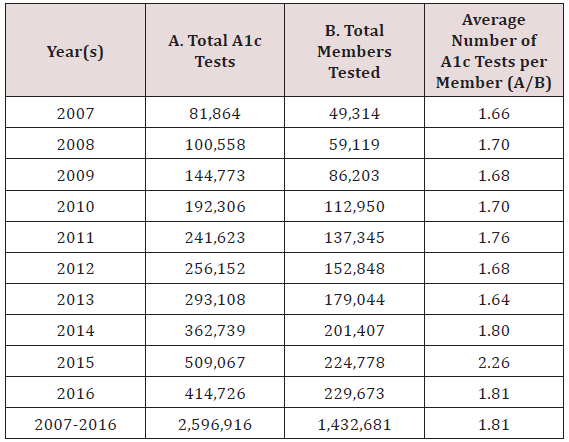
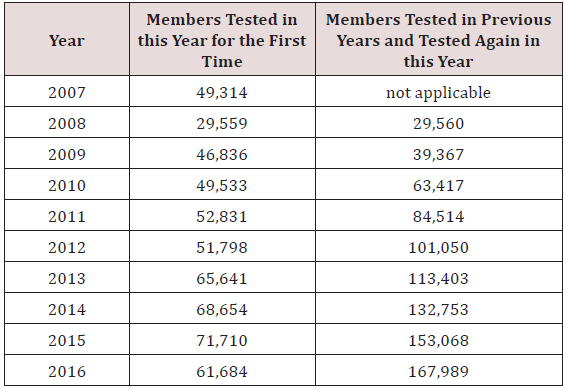
The site for this study is a large coordinated care organization, DaVita HealthCare Partners, a DaVita Medical Group (DHCP), which serves over half a million members in the greater Los Angeles, California region. DHCP sought to increase A1C testing among its members to help control diabetes and prediabetes and implemented a multifaceted approach, involving both providers and patients over several years [7,8]. This article analyzes the experience of their program to expand A1C testing as a first step to broader population health management of their membership. We analyze data including the total number of A1C tests and the total members tested over the 10-year period 2007 through 2016. Our calculations focus on the average number of A1C tests per member per year and the number of members newly tested each year of the study period. These results are shown in Tables 1 & 2.
Table 1: Average Number of A1c Tests per Member per Year: 2007-2016.
Lupinepublishers-openaccess-Research-Reviews
Table 2: Number of Newly Tested Members and Members with Repeat A1c Testing: 2007-2016.
Lupinepublishers-openaccess-Research-Reviews

Discussion

This analysis shows that a multifaceted approach to increasing A1C testing among all members of a large coordinated care organization is possible, but particularly members who have never been tested as DHCP members, or not recently. Increases in A1C testing from current levels will be necessary to prevent future cases of diabetes as well as improve blood glucose control. Population health management in the.com and other countries can increase testing levels. Tailoring the message according to the characteristics of the target population of patients and providers will undoubtedly be necessary. For DHCP future outreach and embedded research will focus on subpopulations and how best to target A1C testing to identify patients with prediabetes or undiagnosed or uncontrolled diabetes. Only with testing can providers work with patients to help them control their blood sugar levels and possibly avoid a future diabetes diagnosis or poor outcomes such as vision loss and nerve damage.
For more Lupine Publishers Open Access Journals Please visit our website:
http://lupinepublishers.us/
For more Research and Reviews on Healthcare articles Please Click Here:
https://lupinepublishers.com/research-and-reviews-journal/

To Know More About Open Access Publishers Please Click on Lupine Publishers
Follow on Linkedin : https://www.linkedin.com/company/lupinepublishers
Follow on Twitter   :  https://twitter.com/lupine_online

Friday, February 28, 2020

Lupine Publishers|Antibiotic Resistance Pattern of Nesseria Gonorrhoea at the Genitourinary Medicine Clinic, Hospital Kuala Lumpur, Malaysia

Lupine Publishers | Journal of Health Research and Reviews

Abstract


Background: In the era of super bugs, there is a need to monitor antibiotic resistance patterns. Due to the emergence of antimicrobial resistance worldwide, local antibiotic resistance patterns should be monitored periodically to alert early intervention. This audit was conducted to analyse the antibiotic resistance patterns among the gonococcal urethritis cases that presented to the Genitourinary Medicine (GUM) Clinic, Hospital Kuala Lumpur (HKL), Malaysia.
Methodology: This is a retrospective study on the antibiotic resistance patterns based on 370 culture positive gonorrhoea obtained from urethral swab samples sent between 2011 and 2015. Antimicrobial susceptibility testing by standard disc diffusion method was performed to detect sensitivity to penicillin, tetracycline, ciprofloxacin, cefuroxime, azithromycin and ceftriaxone. All data was obtained from microbiology report and patient records.
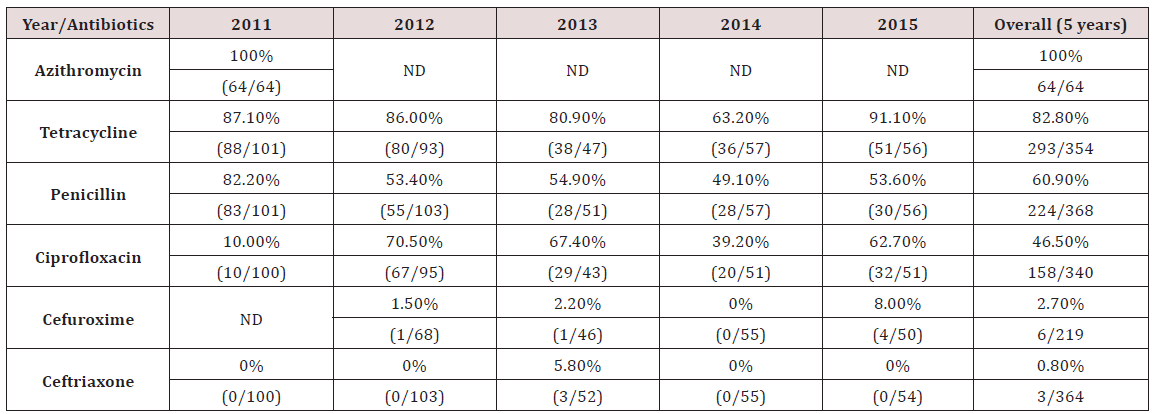
Results: A total of 370 positive culture isolates of N.gonorrhoeae (new and recurrent cases) from 2011 to 2015 were reviewed. Highest level of resistance detected was to azithromycin (100%, 64/64) followed by tetracycline (82.8%, 293/354). Resistance to penicillin was noted in 60.9% (224/368) of all isolates. Both penicillin and tetracycline showed a decreasing resistance trend from 2011-2015. The fourth commonest antibiotic resistance was to ciprofloxacin at 46.5% (158/340). Cephalosporins tested were cefuroxime and ceftriaxone, which showed resistance rates of 2.7% (6/219) and 0.8% (3/364), respectively.
Conclusion: The complete resistance to azithromycin is alarming since it is a common antibiotic used to treat urethral discharge using the syndromic approach. Penicillin and tetracycline resistance remain high in Malaysia and other Western Pacific countries. The current first line antibiotic for treating gonorrhoea in GUM Clinic, HKL is ceftriaxone. Clinicians should be aware of the newly discovered increase in resistance observed to ceftriaxone.
Keywords: Neisseria gonorrhoeae; Gonorrhoea; Antibiotic Resistance

Introduction


The last decade has seen Neisseria gonorrhoeae emerging as a true superbug, bringing.com closer to a time of untreatable gonorrhoea. This diplococcal microbe is able to recombine its genes and invade the immune system through antigenic variation. It is also naturally competent to acquire new deoxyribonucleic acid (DNA), enabling N. gonorrhoeae to spread new genes, disguise itself with different surface proteins, and prevent the development of immunological memory an ability that has led to antibiotic resistance and has made vaccine development difficult. Gonorrhea is a debilitating disease, which was responsible for an estimated 445,000 years lived with disability in 2015, according to a systemic analysis for the Global Burden of Disease Study [1]. Patients infected with N.gonorrhoeae are known to present with urethral discharge, malaise and symptoms that may suggest a urinary tract infection. Nevertheless, urogenital gonorrhea may be asymptomatic in 40% of men and often manifests as urethritis [2,3].
Unfortunately, it is also asymptomatic in more than half of women [4]. In men, untreated urethral infection can lead to epididymitis, reduced fertility, and cause urethral strictures. In women, if present, symptoms are non specific and include abnormal vaginal discharge, dysuria, lower abdominal discomfort, and dyspareunia. The lack of discernible symptoms results in unrecognized and untreated infections, which can lead to serious complications [5]. Overall, 10%-20% of female patients develop pelvic inflammatory disease (PID) and, consequently, are at risk for infertility [6]. Pregnancy complications associated with gonorrhea include chorioamnionitis, premature rupture of membranes, preterm birth, ectopic pregnancies, and spontaneous abortions [5,7,8]. Infants of mothers with gonococcal infection can be infected at delivery, resulting in neonatal conjunctivitis (ophthalmia neonatorum). Such untreated conjunctivitis may lead to scarring and blindness.
Extragenital infections are common in both sexes and frequently occur in the absence of urogenital infection [9,10]. Rectal infections are usually asymptomatic but can manifest as rectal and anal pain or discharge. Pharyngeal infections are mostly asymptomatic, but mild sore throat and pharyngitis may occur. Although bacterial concentrations are generally lower than in other infection sites, the pharynx is thought to be a favourable site for resistance emergence due to acquisition of resistance traits from commensal Neisseria spp [11]. Disseminated gonococcal infections with gonococcal arthritis also occur. Because they are frequently asymptomatic, extragenital infections often remain untreated, despite their key role in disease transmission. Co-infection with other major Sexually Transmitted Infections (STIs) HIV, Herpes simplex virus, Chlamydia trachomatis, Mycoplasma genitalium, and Treponema pallidum are common and may result in synergistic effects on transmission and disease severity. Attempts to treat and control gonorrhoea are compromised by the emergence and spread of antibiotic resistant N.gonorrhoeae. Antibiotic resistance pattern vary between different geographical areas. It is therefore important to know the local antibiotic resistance pattern, so that appropriate treatment can be instituted. In Malaysia, Kanamycin was used as the first line antibiotic to treat gonorrhoea during the early 1970’s and 80’s, which was subsequently changed to Spectinomycin, followed by Ceftriaxone since the early 1990’s [12] There are many surveillance programmes on antibiotic resistance patterns of N.gonorrhoeae such as GRASP (Gonococcal Resistance to Antimicrobial Surveilance Programme), that is based in London, UK, and WHO (World Health Organization) Antimicrobial Surveilance Programme [13,14].

Materials and Methods


All patients with positive culture for gonorrhoea, who attended the GUM clinic in HKL between 2011-2015, were included in this study. Antimicrobial susceptibility testing by standard disc diffusion method was performed to detect sensitivity to Penicillin, Tetracycline, Ciprofloxacin, Cefuroxime, Azithromycin and Ceftriaxone. Data was obtained from patient records and formal microbiology laboratory results.

Results


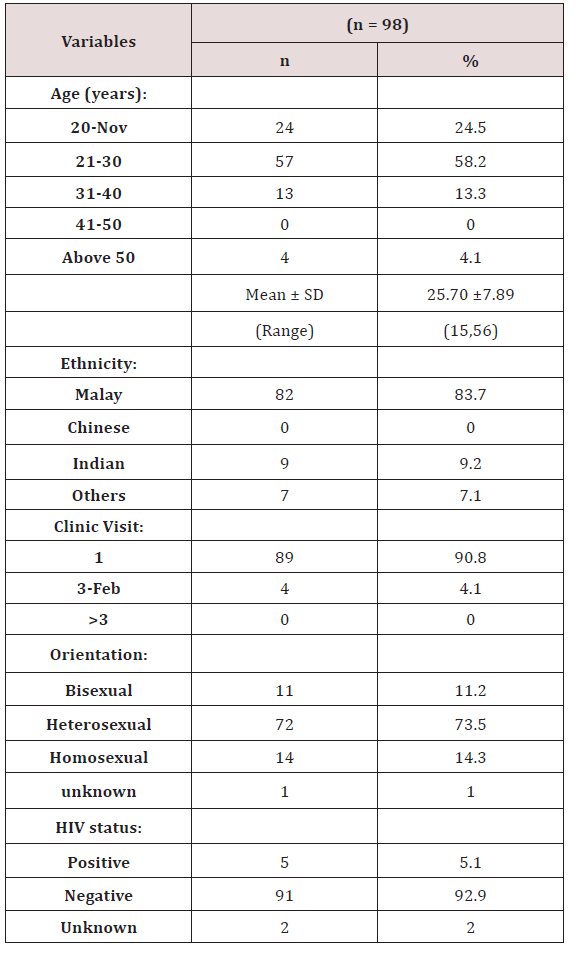
370 positive culture isolates of N.gonorrhoeae from patients seen in 2011-2015 were included in this study. Most of the data were obtained from the microbiology laboratory results. Demographic data was available for 98 patients only. More than half of the patients (58.2%) were between 21-30 years old. Most patients were Malay (83.7%), followed by Indian (9.2%). Overall, the heterosexually orientated patients represented about 73% of gonococcal urethritis cases. Majority of cases (92%) tested negative for HIV (Tables 1 & 2). The highest level of resistance detected was to azithromycin (100%, 64/64), followed by tetracycline (82.8%, 293/354). Resistance to penicillin was noted in 60.9% (224/368) of all isolates. Both penicillin and tetracycline showed a decreasing resistance trend from 2011-2014, but increased in 2015. The fourth commonest antibiotic resistance was to ciprofloxacin at 46.5% (158/340), followed by cefuroxime 2.7% (6/219). Resistance to ceftriaxone was 0.8% (3/364), although reviews previously in 2001-2005 showed no resistance [12]. The results were compared to data obtained from the Gonococcal Resistance to Antimicrobials Surveillance Programme (GRASP) and WHO (World Health Organization) Antimicrobial Surveillance Programme [13,14].
Table 1: Demographic characteristics of patients with gonorrhoea.
Lupinepublishers-openaccess-Research-Reviews
Table 2: Summary of antibiotic resistance pattern of N.gonorrhoeae (2011-2015) in HKL.
Lupinepublishers-openaccess-Research-Reviews

Discussion


Azithromycin

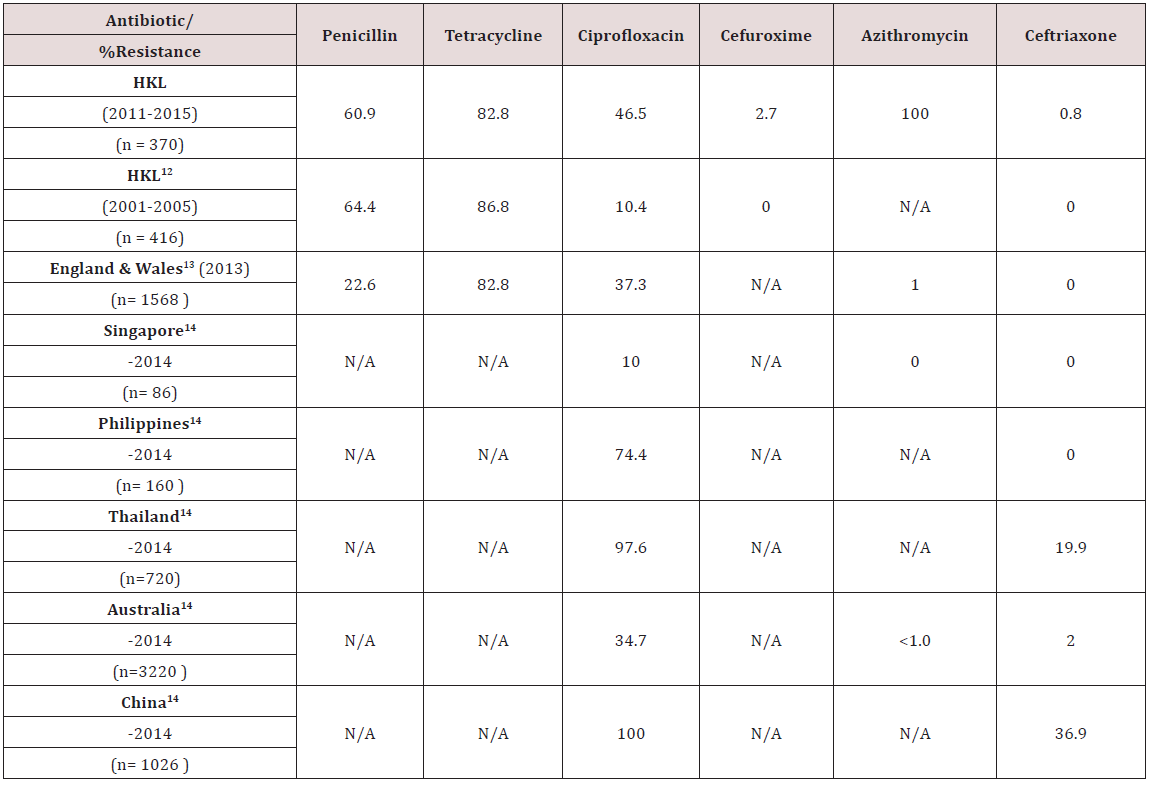
The rate of resistance to Azithromycin in this study was higher than expected. All 64 samples tested for sensitivity to Azithromycin showed resistance. In Singapore, no resistance to Azithromycin has been documented [14]. Similarly in England & Wales and Australia, the rate of resistance is significantly lower, at 1% or less [13,14] (Table 3). Studies have indicated concerns for increasing resistance to Azithromycin, likely due to delay in diagnosis of gonorrhoea and suboptimal dose of Azithromycin used [15].
Table 3: Comparison of N.gonorrhoeae antibiotic resistance pattern in HKL with other countries.
Lupinepublishers-openaccess-Research-Reviews

Tetracycline

The rate of resistance to Tetracycline is high. In our study, 82.8% of N.gonorrhoea isolates were resistant to Tetracycline. This is slightly lower, compared to an earlier analysis done in HKL from 2001-2005, where 86.8% of isolates were resistant [12]. The resistance rates in England & Wales was similar to ours [13] (Table 3). Looking at the trend, there was a reduction in resistance rates from 87.1% in 2011 to 63.2% in 2014. However, the rate increased to 91.1% in 2015 (Table 2). In HKL, Doxycycline is sometimes used to treat non-gonoccocal urethritis but never as primary treatment for gonorrhoea. Tetracycline has never been used for treating gonorrhoea in HKL as the resistance is very high. Nevertheless, the resistance pattern is continuously monitored for epidemiological purposes.

Penicillin

Since the 1940’s, Penicillin was successfully used to treat gonorrhoea, but quickly developed decreased sensitivity and deemed not a suitable treatment after 1970. This can be due to Penicillinase Producing N.gonorrhoeae (PPNG) or Chromosomal Mediated Resistance N.gonorrhoeae (CMRNG) [16]. Our study shows that the rate of N.gonorrhoeae resistance to Penicillin has reduced, from 82.2% in 2011 to 53.6% in 2015 (Table 2). Compared to an earlier study done in HKL in 2001-2005, there was a slight drop in resistance to penicillin in HKL from 64.4% to 60.9% in 2011-2015. However, our resistance rates were much higher compared to the resistance rate reported in England & Wales of 22.6% (Table 3) [13].

Ciprofloxacin

In the early 1990’s, Ciprofloxacin was widely used especially by general practitioners to treat gonorrhoea although studies had already began demonstrating the beginning of reduced sensitivity to quinolones. The resistance to Ciprofloxacin in HKL showed a steady increase from 10.0% in 2011 to 62.7% in 2015 (Table 2). When compared to an earlier review in HKL from the period 2001- 2005, we can see marked increase in resistance to Ciprofloxacin from 10.4% to 46.5% in 2011-2015 (Table 3). The resistance rate reported in HKL from 2011-2015 was similar to England & Wales and Australia, which reported resistance of 37.3% and 34.7% respectively (Table 3) [13,14]. Among the Asian countries, Singapore reported the lowest resistance to Ciprofloxacin (10.0%) [14]. Other Asian countries, like the Phillipines, Thailand and China reported an alarmingly high resistance to Ciprofloxacin, which is between 74.4%-100% (Table 3) [14].

Cephalosporin–Cefuroxime and Ceftriaxone

Although Cefuroxime is not a recommended treatment for gonorrhoea, its resistance pattern is monitored for epidemiological purposes. Our study showed a resistance rate of 2.7% to Cefuroxime in 2011-2015, whereas an earlier study in 2001-2005 showed no resistance to Cefuroxime (Table 3). Susceptibility testing for Ceftriaxone use in the treatment of gonorrhoea in HKL between 2001-2005 indicated no resistance, however, recent data from 2011-2015 showed a resistance rate of 0.8% (Table 3). Ceftriaxone is the first line treatment of gonorrhoea in HKL and clinicians should be aware that we are seeing a small percentage of resistance in some cases. No resistance was noted in Singapore and the Phillipines (Table 3) [14]. Resistance rates to Ceftriaxone in Thailand and China are significantly higher, at 19.9% and 36.9% respectively (Table 3) [14].

Conclusion


Attempts to treat and control gonorrhoea are compromised by the emergence and spread of antibiotic-resistant N.gonorrhoeae. WHO expert committee has recommended that treatment regimen be altered once resistance to a particular antibiotic reaches 5%. High rates of resistance to Penicillin and Tetracycline have been documented in HKL and in the Western Pacific region. Within 15 years, a marked increase in Ciprofloxacin resistance (10% to 46.5%) is evident. Resistance to Cefuroxime and Ceftriaxone was discovered, which was not found in the previous study. Ceftriaxone remains the first line antibiotic in treating gonorrhoea in HKL, and clinicians need to be aware of the small percentage of resistance detected to Ceftriaxone.

Acknowledgement


We would like to thank the Director General, Ministry of Health, Malaysia for permission to publish this study, and the staff from Genitourinary Medicine Clinic, HKL for data collection.


For more Lupine Publishers Open Access Journals Please visit our website:
http://lupinepublishers.us/
For more Research and Reviews on Healthcare articles Please Click Here:
https://lupinepublishers.com/research-and-reviews-journal/

To Know More About Open Access Publishers Please Click on Lupine Publishers
Follow on Linkedin : https://www.linkedin.com/company/lupinepublishers
Follow on Twitter   :  https://twitter.com/lupine_online



Monday, February 17, 2020

Lupine Publishers | Intracardiac Papillary Fibroelastoma: A Case Report

Lupine Publishers | Journal of Health Research and Reviews

Abstract

Most of primary cardiac masses correspond to benign tumors within which are the myxomas, rhabdomyomas and papillary fibroelastomas that occupy the third place in prevalence. These lesions are rare and are usually found incidentally in routine studies. More than 90% of papillary fibroelastomas occur in the heart valves, the most frequent being the aortic valve and the mitral valve. Echocardiography studies have reported a size between 2 and 40mm, mostly corresponding to single lesions, with a short pedicle, which present independent movement and are attached to an endocardial surface. The treatment is surgical since they can present complications like embolism to the pulmonary or systemic circulation, significant hemodynamic obstruction and death secondary to these embolic events. We present the case of an asymptomatic patient in whom a papillary fibroelastoma located in the tricuspid valve was documented, which was successfully resected.
Keywords: Cardiac tumors; papillary fibroelastomas; Embolism; Echocardiography

Introduction

Heart tumors include a wide number of lesions that may be of neoplastic or non neoplastic origin. Primary benign lesions are approximately 90% of primary heart tumors, including myxomas, rhabdomyomas, fibroids, and lipomas, among others [1]. Metastatic lesions are more frequent than primary lesions, found in nearly 18% of stage IV cancer [2]. Most heart tumors are incidentally found during routine cardiac imaging, and their prevalence in autopsy series is less than 0.1% [3-5]. Patients with primary tumors are usually asymptomatic until lesions grow large and generate symptoms related to mechanical obstruction, valve interference, alterations in contractility or in the electrical conduction system, generating arrhythmias and blockages [1,6]. Papillary fibroelastoma is the third most prevalent primary tumor after myxoma and rhabdomyoma. It may compromise valve surface, although cases of compromised interventricular or interatrial septum have also been reported [6,7]. Next we present the case of an asymptomatic patient with papillary fibroelastoma in the tricuspid valve, which was successfully resected.

Case Background

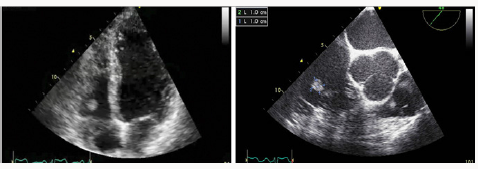
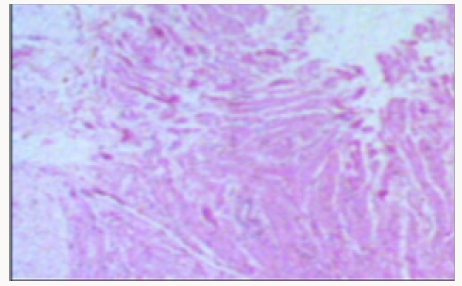
51-year-old man with a history of controlled hypertension and an active smoker, asymptomatic from a cardiovascular point of view who underwent a transthoracic echocardiogram during his routine checkup in his hometown. The exam revealed a mass attached to the tricuspid valve, and thus the patient was referred to our hospital for assessment. He was hemodynamically stable when he checked in at Hospital Militar Central (HMC), with no abnormal findings after physical examination and with normal range of laboratories and preoperative electrocardiogram values. After checking in at the HMC, the patient underwent a transesophageal echocardiogram to better characterize the lesion, which revealed a 11mm x 11 mm rounded, pedunculated mass of endocardial density in the lateral valve (Figure 1), without regurgitation and with preserved ejection fraction of the left ventricle (63%). The remainder of the description of this study was normal. Both the transthoracic and the transesophageal projection show a 11mm x 11 mm rounded, pedunculated mass of endocardial density in the anterior tricuspid valve. The subject underwent additional presurgical testing in the form of a coronary angiography, which revealed epicardial arteries without angiographically significant lesions. The patient’s case was submitted to the Board of Cardiology and to the cardiovascular surgery service, and it was concluded that he was suitable for surgery. The histopathological study of the sample taken in surgery was reported as papillary fibroelastoma type myxoid tissue mass of mesenchymal origin with a low degree of malignancy (Figure 2). The patient evolved without complications during the postoperative period and was discharged after 7 days of hospitalization.
Figure 1: Transthoracic (left) and transesophageal (right) echocardiogram.
Lupinepublishers-openaccess-Research-Reviews
Figure 2: Sample of resected mass.
Lupinepublishers-openaccess-Research-Reviews

Discussion

Heart tumors or masses are rare lesions that are documented parenthetically when performing a routine cardiac imaging. They can be classified into neoplastic and non-neoplastic tumors, the former being 20 to 50 times more frequent than primary tumors [1,7,8]. The prevalence of primary tumors is very low, being between 0.001 and 0.03% according to reports in autopsy series; as for neoplastic cardiac lesions, they can be found in about 18% of stage IV cancer patients [2-5]. Most primary heart tumors are benign, myxomas being the most frequent in adults, while rhabdomyoma is the most common in children. The third most frequent primary heart tumor in adults is the papillary fibroelastoma, which can be generated on any surface of the endocardium, being more commonly located in the heart valves. It makes up less than 10% of all cardiac tumors and is the most common valve tumor [5,8,9]. Papillary fibromyosarcomas are benign proliferations consisting of soft fibroblasts and variable collagenized stroma derived from the endocardium. They can occur at any age, but are more common in adults between 70 and 80 years. Over 90% of fibroelastomas occur in the heart valves, and close to 10% happen in non-valvular surfaces, such as the interventricular or interatrial septum [1,8]. From a clinical point of view, up to a third of patients are asymptomatic, so their diagnosis is mainly incidental in autopsies, in echocardiographic studies or during a cardiovascular surgery [10-12]. In the case of patients with symptoms, they are secondary to obstructive effects of the coronary ostium or to embolic events in pulmonary or systemic circulation due to detachment of mass fragments or accumulated thrombi that have also been described in cases of sudden death by embolization in coronary arteries and in cases of ischemic cerebrovascular events [1,8,13].
Regarding the findings in echocardiography, the lesions are usually located in the aortic valve, followed by the mitral valve, with a size between 2 and 40 mm, making them easier to detect in transesophageal echocardiograms. The overall mass is unique, with a short pedicle; it moves independently and it is attached to an endocardium surface. Given that the tumor has papillary extensions attached to the central pedicle, an image in the shape of a sea anemone is observed. Sometimes it is difficult to differentiate the lesion when it is attached to the valves when they are moving and when they are smaller than 2 mm [5,8]. Although the papillary fibroelastoma can be seen in the Computerized Axial Tomography and the Nuclear Magnetic Resonance, the echocardiogram is still the best image to evaluate these lesions since they are highly mobile and can be better seen in high resolution mode or zoom mode. Larger lesions may be accompanied by calcifications, which makes it easier to identify them [1,5]. The differential imaging diagnoses of this type of tumors include Lambal’s excrescences, which look more linear and are smaller, the vegetations that are usually accompanied by valve incompetence and destruction of the valve leaflets, thrombi and valve degenerative changes. Although these tumors are formed in the heart valves, the dysfunction of these structures is rare [5,8,10]. Treatment of benign primary tumors such as papillary fibroelastoma is surgical. Some authors suggest that, in the case of tumors on the left side, they should be resected in patients without high surgical risk if the size is greater than 1 cm or during another type of heart surgery. In the case of lesions on right side of the heart, they should only be resected if they are large or moving, and if they are associated with a hemodynamically significant obstruction or with a high risk of embolism due to short circuit from right to left [5,14]. Although a significant percentage of patients are asymptomatic, we suggest that those that meet the aforementioned criteria be resected, given the high risk of cerebrovascular events and death, aiming to use a technique that conserves the native valve [1,15]. If the patient does not have any symptoms or if the tumor is small, has no pedicle and is not moving, of if it is not possible to perform the surgical procedure due high surgical risk or due to the patient’s preference, we suggest antiplatelet therapy, even though there are few publications that support this recommendation [5,15].

Conclusion

Primary cardiac fibroelastoma of the papillary fibroelastoma type are rare masses that are usually found incidentally during routine exams conducted to frequently asymptomatic patients. The image that can best characterize this type of mass is the transesophageal echocardiogram and the recommended management is surgery, considering the risk of embolic events and the individual characteristics of both the patient and the tumor,

Ethical Responsibilities

Protection of people and animals. The authors declare that no experiments have been conducted on humans or animals for this research.
a. Data Confidentiality: The authors declare that they have followed the protocols of their work center on the publication of patient data. Right to privacy and informed consent. The authors declare that patient data does not appear in this paper.

For more Lupine Publishers Open Access Journals Please visit our website:
http://lupinepublishers.us/
For more Research and Reviews on Healthcare articles Please Click Here:
https://lupinepublishers.com/research-and-reviews-journal/
To Know More About Open Access Publishers Please Click on Lupine Publishers
Follow on Linkedin : https://www.linkedin.com/company/lupinepublishers
Follow on Twitter   :  https://twitter.com/lupine_online


Friday, January 10, 2020

Lupine Publishers |Varied Presentation of Unusual Soft Tissue Lesions- A Case Series

Lupine Publishers | Journal of Health Research and Reviews

Abstract

Malignant chest wall tumors are broadly classified into eight main diagnostic categories: muscular, vascular, fibrous and fibrohistiocytic, peripheral nerve, osseous and cartilaginous, adipose, hematologic and cutaneous. Some other malignant chest wall tumors that do not fit well in any of such category are synovial sarcoma and ewing’s sarcoma. Sarcomas of soft tissues, particularly those from the deep sites of the extremities raise a problem of diagnosis and treatment. Hemangiopericytoma (HPC) is a rare vascular tumor, and is most controversial, because earlier it was thought to represent a neoplasm of the pericytes of Zimmerman. Histiocytic sarcomas, including malignant fibrous histiocytoma (MFH), represent a group of neoplasms with an unpredictable course and for which treatment varies widely. Pleomorphic malignant fibrous histiocytoma (MFH) which is also known as undifferentiated high-grade pleomorphic sarcoma according to the latest World Health Organization classification is a diagnosis of exclusion. Myxoid liposarcoma (LS) is the most common subtype of liposarcoma and occurs predominantly in the extremities. Different cytogenetic features and their underlying molecular alterations define distinct entities among LS. Myxoid LS has a strong and specific association of the (12;16). Inflammatory fibrosarcoma, commonly referred to as inflammatory myofibroblastic tumor (IMT) has become as part of a spectrum of inflammatory myofibroblastic proliferation. It is potentially locally aggressive tumor of the mesentery of children and young adults. Immunohistochemistry plays an important role to distinguish different types of soft tissue tumors with similar morphology.
Keywords: Hemangiopericytoma; Pleomorphic malignant fibrous histiocytoma; Myxoid liposarcoma; Inflammatory fibrosarcoma.

Introduction

Hemangiopericytoma behaves aggressively with a high rate of local recurrence and distant metastases [1]. Hemangiopericytomas also represent rare intracranial tumors that have a tendency to recur locally and have the unique characteristic of extracranial metastases [2]. It has two histologic forms: conventional HPC and lipomatous HPC. Both the forms show a sponge‐like sinusoidal vasculature and staghorn‐shaped blood vessels which are haphazardly bounded and surrounded by ovoid and short spindle shaped cells. Histologic identification of lipomatous HPC is readily achieved because of an HPC like appearance with the added finding of a lipomatous component. Clinical presentation of conventional HPC is nonspecific. Pain is a late symptom associated with an enlarging mass; though symptoms vary depending on the site of disease. Characteristically, HPC is a well‐circumscribed, brown, spongioform lesion, surrounded by a pseudo‐capsule, often with small satellite nodules separate from the main tumor mass, whereas synovial sarcoma is grossly cream‐colored on gross examination [3].
Malignant fibrous histiocytoma presents with a rapid tumorous growth as the major symptom. The lower extremities are the most frequent anatomic site (±50%). This tumor may occur at any age but has a predilection for the 6th and 7th decades in males. The most important clinical prognostic features include site, depth, volume and number of muscles involved and the integrity of the neurovascular structures. The inflammatory component, mitotic index, cellular polymorphism and paraneoplastic syndromes are some of the other prognostic factors. Liposarcoma (LPS) is considered as one of the most common histologic subtypes of adult soft tissue sarcoma. Myxoid liposarcoma is a painless, slowly growing mass present for several months to several years. These tumors are encapsulated, non-infiltrating, nodular masses of varying size and usually septated. Myxoid liposarcoma of the extremities and trunk wall rarely show distant metastasis [4]. Few cases present with a painful nodule [5]. Inflammatory fibrosarcoma which is commonly referred to as inflammatory myofibroblastic tumor is a potentially locally aggressive myofibroblastic tumor that occurs predominantly in the mesentery of children and young adults. They are characterized as solitary, well-demarcated fibrous tumors with numerous inflammatory cells, mainly lymphoid or plasma cells along and may have associated reactive lymphadenopathy.

Case Summary

Case 1: Hemangiopericytoma: A 26-year-old female patient presented to the Surgical Clinic with complaints of pain and mass in the right anterior chest wall for two months. On physical examination, pulmonary auscultation showed decreased respiratory sounds on right side. A hard mass of approximately 10x10cm was palpated in the midline of right chest wall. Other physical examination findings with medical and familial history was non-contributory. The complete blood count and routine biochemical analysis were normal. On PA chest radiography, a mass of approximately 10x10cm was seen in the right lung with right pleural effusion. On thoracic computerized tomography, a heterogeneous mass with lobular contour localized in right mid lobe with continuity to the anterior chest wall without forming a costal destruction was observed. The mass was seen pushing forward the pectoral muscle without invading the breast tissue. An incisional biopsy was obtained from the mass and the histopathologic examination showed a malignant mesenchymal tumor, rich in vessels. Thereafter, an operation was planned for the patient and the vascular tumor mass disseminating to extrapleural space and the bottom tip of the sternum and the 4th, 5th, 6th, and 7th costae was excised.
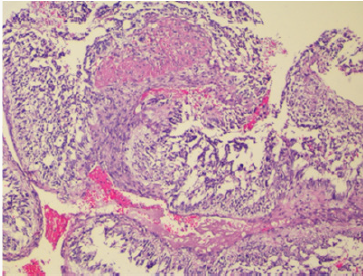
Figure 1: Hemangiopericytoma: Tissue section showed a high cellularity mass with uniform tumor cells with minimal pleomorphism, spindle to round to oval nuclei with vesicular to hyperchromatic chromatin and eosinophilic cytoplasm with indistinct cell borders and richly vascularized with staghorn-appearing vessels, with high mitotic activity. Hematoxylin and Eosin x 40X.
Lupinepublishers-openaccess-Research-Reviews
The histopathologic examination showed a high cellularity mass with uniform tumor cells with minimal pleomorphism, spindle to round to oval nuclei with vesicular to hyperchromatic chromatin and eosinophilic cytoplasm with indistinct cell borders. The tumor was richly vascularized with staghorn-appearing vessels, with high mitotic activity (Figure 1). There was no evidence of tumor tissue infiltrating the bone and the cartilaginous tissues. On immunohistochemistry, the tumor cells were diffusely positive for CD34 and MIC-2 whereas staining for actin and EMA was negative. Our patient is doing well after 12 months of follow up.
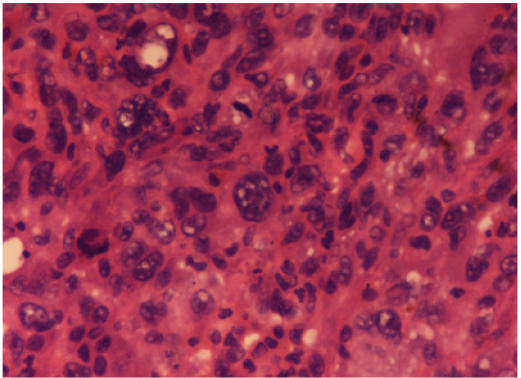
Figure 2: Malignant fibrous histiocytoma: Microscopically, the lesion showed marked architectural and cytologic pleomorphism with haphazardly arranged malignant plump to spindle shaped cells admixed with giant cells. Hematoxylin and Eosin x 40X.
Lupinepublishers-openaccess-Research-Reviews
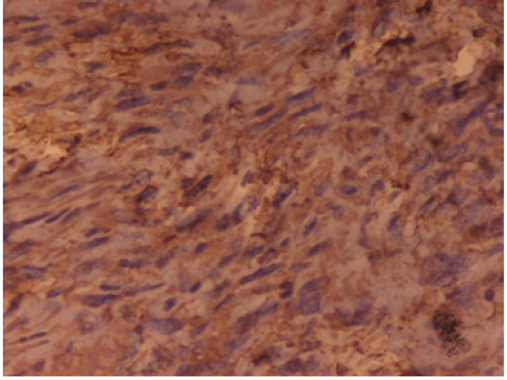
Figure 3: Malignant fibrous histiocytoma: The neoplastic cells were positive for vimentin. IHC Vimentin x 40X.
Lupinepublishers-openaccess-Research-Reviews
Case 2: Pleomorphic Malignant Fibrous Histiocytoma (Mfh): A 63-year-old man presented with a thigh mass for 10 months. On local examination, the mass was 12x 9cm, firm in consistency with ill-defined margins. The specimen of emergent debridement was submitted for pathologic and bacteriologic examination. Microscopically, the lesion showed marked architectural and cytologic pleomorphism with haphazardly arranged malignant plump to spindle shaped cells admixed with giant cells (Figure 2). The neoplastic cells were positive for vimentin (Figure 3), but negative for all lineage-specific markers. The diagnosis of pleomorphic MFH was made. Thoracic computed tomography scan showed bilateral multiple pulmonary nodules. The patient died 1 month later.
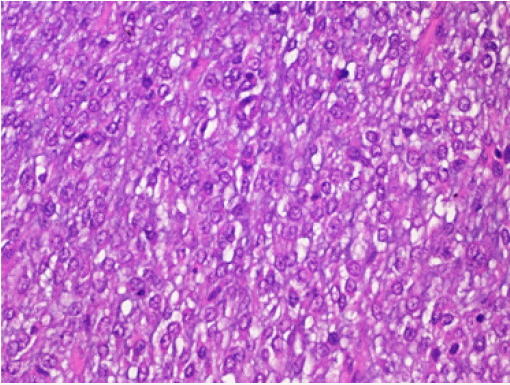
Case 3: Myxoid Liposarcoma: A 25-year-old man presented to the Surgical Clinic with complaints of soft tissue mass in the left thigh for the last 3 months. On local examination, the mass was soft to firm in consistency, well circumscribed of 12x10cm size. Blood parameters were normal and there was no functional abnormality. He was operated upon with wide local excision. The excised mass was 10x9.5cm, soft to gelatinous in consistency without necrosis or haemorrhage. Histopathological examination revealed a myxoid tumor comprising of small dark oval cells in a myxoid background. An extensive capillary network with typical lipoblasts were also seen with mitotic activity of 5 mitosis/ 10HPF (Figure 4). A diagnosis of myxoid liposarcoma was given. The initial surgery was accompanied with adjuvant chemotherapy and complementary radiotherapy. The patient was well after 12 months of follow up.
Figure 4: Myxoid liposarcoma: Histopathological examination showed a myxoid tumor comprising of small dark oval cells in a myxoid background. An extensive capillary network with typical lipoblasts were also seen with mitotic activity of 5 mitosis/ 10HPF. Hematoxylin and Eosin x 40X.
Lupinepublishers-openaccess-Research-Reviews
Case 4: Inflammatory Fibrosarcoma: A 42 years old male presented to the Surgery Out-patients Department with complaints of generalised severe pain in the abdomen, localized mainly in the right iliac fossa for 2 days. He was previously fit and healthy and started with generalised feeling of being unwell for four months with mild recurrent pain abdomen, bloating sensation, loss of weight over half a stone and loss of appetite. There was no history of bladder or bowel disturbance, fever, jaundice or vomiting. His pain was worse in the last 2 days associated with nausea. On clinical examination he appeared anxious and sweaty with mild dehydration. Abdominal examination showed tenderness and guarding in the right iliac fossa with the rest of the abdomen soft and there were no masses palpable. Rectal examination was unremarkable. A possible diagnosis of appendicitis was made. Haematological investigations showed a raised white cell count of 17.800/cc and biochemical investigations were within the normal limits. Chest X-Ray was normal with the abdomen plain film showing stones in the gall bladder and a few dilated small bowel loops. Urgent ultrasound scan of abdomen confirmed a small collection of fluid in the right iliac fossa and gallstones with no gas in the biliary tree. In view of the uncertain diagnosis a laparotomy was carried out. This revealed a large mass in the right iliac fossa at the Ileo-caecal junction. The distal ileum was adhered to caecum and adjacent mesentery with thick pus between the loops of small bowel. Right hemicolectomy and an end to side ileo-transverse anastomosis was performed. The postoperative recovery of the patient was uneventful. The histopathology was initially reported as highly cellular spindle cell tumour, with frequent mitotic activity with the most likely site of origin of tumour being bowel wall and spreading in to the surrounding areas including the mesentery. Tumour markers SMA, desmin and vimentin were positive there by indicating leiomyosarcoma. In view of the positive cytokeratin immunostaining, a second opinion was sought by pathologists. On further review, an “Inflammatory fibrosarcoma of the colon” was given due to the marked pleomophism and associated inflammatory cell infiltrate (Figure 5).
Figure 5: Inflammatory Fibrosarcoma: The histopathology revealed a cellular spindle cell tumour, with frequent mitotic activity with marked pleomophism and associated inflammatory cell infiltrate. Hematoxylin and Eosin x 40X.
Lupinepublishers-openaccess-Research-Reviews

Discussion

Hemangiopericytoma is a rare tumor of adult, found mainly in the fifth decade of life. It is most frequently mimicked by synovial sarcoma which occasionally presents as a pure hemangiopericytoma like lesion. These tumors can originate anywhere in the body where there are capillaries. The most common locations reported are the brain, lower extremities, pelvis and head & neck. It originates in the pericytes, the cells normally arranged along specific types of blood vessels. It can be broadly classified as intracranial and extracranial. Extracranially, it can occur at any site throughout the body in soft tissues and bone. They have a grade 2 or 3 behavior and needs to be distinguished from benign meningiomas because of their high rate of recurrence (41%) and metastases (12-20%) [6]. They are highly cellular and mitotically active neoplasm that is rich in pericellular reticulin and stains with anti-type IV collagen. They can be distinguished from benign meningiomas by their hypercellularity, higher mitotic index and microscopically bulge into vascular lumens without bursting through the endothelium, exhibiting a characteristic well-developed “staghorn” branching vascular pattern [7]. They are painless masses and may not have any associated symptoms. They can remain undetected for long periods of time due to the fact that they originate in soft tissue except when intracranial it can cause neurological disturbances. Exhibiting a characteristic well-developed “staghorn” branching vascular pattern. Differential diagnosis includes synovial sarcoma (similar vascular pattern, characteristic translocation), mesenchymal chondrosarcoma (islands of mature cartilage; malignant chondrocytes present), fibrous histiocytoma (storiform pattern, fibrohistiocytic lesion) and solitary fibrous tumor (more prominent collagen, less prominent vessels). Hemangiopericytoma on immunohistochemistry stain positive for CD99, vimentin, CD 34 and negative for Factor VIII and CD31. In adults, complete surgical resection remains the mainstay of treatment. Malignant fibrous histiocytoma has more recently been classified as pleomorphic undifferentiated sarcoma (PUS). It is considered as the most common type of soft tissue sarcoma in adults and has an aggressive biological behaviour with poor prognosis [8,9]. Typically occurs in adults with a slight male predilection. The presentation is usually with a painless, enlarging and well circumscribed palpable mass. They are usually confined to the soft tissues having predilection for extremities but occasionally may arise in or from bone also (1-5%). Some of its histological subtypes includes storiformpleomorphic, myxoid, myxofibrosarcoma, inflammatory, giant cell and angiomatoid. Pleomorphic malignant fibrous histiocytoma which is the most common subtype is considered a diagnosis of exclusion for sarcomas that cannot be more precisely categorized [10]. Imaging typically shows a well-circumscribed mass that is dark on T1-weighted images and bright on T2-weighted images. Histomorphology is characterized by high cellularity, marked nuclear pleomorphism accompanied by abundant mitotic activity including atypical mitoses and a spindle cell morphology. Necrosis is commonly present. Treatment consists of surgical excision and in almost all cases radiation eliminates the need for limb amputation.
Liposarcoma is a malignant tumor that arises from deep soft tissue fat and not from common lipomas. It accounts for up to 20% of all soft tissue sarcomas and commonly affects adult [11]. It can occur in almost any part of the body, commonly involving thigh and retroperitoneum. There are four subtypes, each having its unique characteristics: well-differentiated liposarcoma (most common subtype), myxoid/round cell liposarcoma, pleomorphic liposarcoma(rarest subtype) and dedifferentiated liposarcoma. Dedifferentiated liposarcoma and pleomorphic liposarcoma are considered as highly malignant [12]. Myxoid liposarcoma (MLS) is considered as a low grade tumor but the presence of areas of round cells more than 5% is associated with a worse prognosis [4]. MLS presents as a slow-growing, deep-seated tumor in the lower extremity of a relatively young adult. Specific chromosomal translocations have been discovered in MLS which consists of the fusion of the FUS and CHOP genes [(t12;16)(q13;p11)] in 90% of tumor [13]. Extremity myxoid liposarcomas have an unusually high predilection for extra-pulmonary metastases often deep soft tissue locations such as retroperitoneum or extrimities without any pulmonary metastases [14,15]. Imaging of the abdomen, retroperitoneum, and extrapleural chest should be performed for accurate staging and post-treatment follow-up of patients with myxoid liposarcoma. In all patients surgical management of the tumor is curative. It is radiosensitive as compared with other soft tissue sarcomas [16]. After treatment of the primary tumor, such patients should be followed with regular chest X-ray and abdominal/pelvic computed tomography (CT) scans.
Fibrosarcoma is a malignant neoplasm of mesenchymal origin in which histologically the predominant cells are fibroblasts that divide excessively without cellular control. Inflammatory fibrosarcoma is rare and was originally described in the lung by names such as pseudotumor, inflammatory pseudotumor and plasma cell granuloma. It is typically considered as a benign tumor with aggressive behavior (low-grade tumor) that can occur anywhere in the body. They are solitary, well-demarcated fibrous tumors and are characterized by storiform pattern of fibrous tissue along with of mixture of inflammatory cells such as plasma cells, lymphocytes and eosinophils as well as spindle cells without nuclear atypia [17]. These tumors may also have necrosis, hemorrhage, focal calcification and mitotic activity. Some of the histologic differential diagnosis includes: calcifying fibrous pseudotumor, inflammatory fibroid tumor and nodular fasciitis. Immunohistochemically, the tumor shows intense immunoreactivity for vimentin, muscle actin, and α-smooth muscle actin but are negative for desmin and highmolecular- weight caldesmon. In addition, tumor cells are not labeled by antibodies against AE1/3 and CAM5.2. The prognosis is generally good on tumor removal, but rarely some tumors are known to metastasize.

For more Lupine Publishers Open Access Journals Please visit our website:
http://lupinepublishers.us/
For more Research and Reviews on Healthcare articles Please Click Here:
https://lupinepublishers.com/research-and-reviews-journal/
To Know More About Open Access Publishers Please Click on Lupine Publishers
Follow on Linkedin : https://www.linkedin.com/company/lupinepublishers
Follow on Twitter   :  https://twitter.com/lupine_online


Lupine Publishers: Lupine Publishers| A Standard Pediatric Dental Clinic

Lupine Publishers: Lupine Publishers| A Standard Pediatric Dental Clinic :  Lupine Publishers| Journal of Dentistry and Oral Health Care Aft...