Showing posts with label open access journals. Show all posts

Friday, October 2, 2020

Lupinepublishers|All Ceramic Resin Bonded Fixed Partial Denture (RBFPD): One or Two-Wings?


  Lupine Publishers | Journal of Health Research and Reviews


Short Communication

The technique of bonded bridges was introduced in dentistry by Rochette in 1963. It was the first type of minimally-invasive fixed prosthesis [1,2]. Its principle consists in bonding a metal frame on the teeth adjacent to the edentulous area. These bonded bridges have experienced significant development from their conception to the present [3,4]. Initially, these restorations failed through frequent debond caused by the absence of tooth preparation, very attractive in the early years. In fact, bonding cannot replace the retention or resistance to occlusal forces (loosening and shear) provided by the preparations. Nowadays, it is widely accepted that a minimal preparation of the supporting teeth is essential to ensure the sustainability of the bonded prosthesis. A careful case selection is important to predict esthetic and functional restoration with medium or long-term survival. Abutments should be vital and aligned showing sufficient enamel available for bonding and should coronal length which is favorable for retention [5].

Conventional or Cantilevered ?

The bonded cantilever bridge is an efficient minimally invasive treatment of the anterior missing teeth [6] It is also a suitable alternative to replace conventional bonded bridges [7] with very low biological complications and satisfactory results in the medium and long term [8] This could be explained by the following points:

a) The results of follow-up tests indicated that the bridges bonded to three elements have failure rates lower than wider fixed partial denture.

b) If selecting a conventional resin bonded bridge, both abutments should have the same mobility, otherwise the weakest may detach from the enamel, compromising the entire restoration. Furthermore, using a single cantilever eliminates the differential bond strength due to differing size and mobility of abutments

c) Two-retainers bonded bridges showed practical problems such as finding a common axis of insertion when respecting the principle of minimally invasive preparation.

d) a cantilevered prosthesis has a reduced biological and financial cost, is easier to prepare, and simplifies impression procedure and cementation over a three-unit design. In addition, a single retainer is usually preferred as debonding will be quickly observed [9].

e) The increase of the adhesion surface must be preferably carried out on a single tooth, respectively number reduced tooth adjacent abutments in the edentulous ridge [10].

f) Favorable clinical monitoring results of resin bonded bridges with two or even a single wing. According to Kaplan- Meier sur¬vival estimates showed no significant difference be¬tween the survival rate of the conventional ones (63%) and cantilevered ones (81%) after 4 years [9].

g) However, The study of Kern, showed that cantilever all-ceramic resin-bonded fixed partial dentures made from high-strength oxide ceramics present a promising treatment alternative to two-retainer RBFPDs. On the other hand, the conventional adhesive bridge remain suitable for some situation such as, After orthodontic, because of its double function as a fixed orthodontic retainer [11].

Conclusion

RBFPDs can be used successfully in both the an¬terior and posterior areas to replace 1 or 2 missing teeth. However, the survival rate this minimally-invasive restoration is still considerably less than that of conventional bridges. The principle reason for failure is de¬bonding of the framework from the abutment teeth. The use of cantilevered and nonrigid attachments may de¬crease inter-abutment forces and reduce debonding. A careful case indication, the selection of non-mobile abutment teeth, preparation designs that enhance retention and resist¬ance form, appropriate material selection and bonding technique are critical for success and longevity.

For more Lupine Publishers Open Access Journals Please visit our website:
http://lupinepublishers.us/
For more Research and Reviews on Healthcare articles Please Click Here:
https://lupinepublishers.com/research-and-reviews-journal/

To Know More About Open Access Publishers Please Click on Lupine Publishers

Follow on Linkedin : https://www.linkedin.com/company/lupinepublishers

Follow on Twitter   :  https://twitter.com/lupine_online


Tuesday, July 16, 2019

Intracardiac Papillary Fibroelastoma: A Case Report- Lupine Publishers


Medical Care Research and Review- Lupine Publishers

Abstract

Most of primary cardiac masses correspond to benign tumors within which are the myxomas, rhabdomyomas and papillary fibroelastomas that occupy the third place in prevalence. These lesions are rare and are usually found incidentally in routine studies. More than 90% of papillary fibroelastomas occur in the heart valves, the most frequent being the aortic valve and the mitral valve. Echocardiography studies have reported a size between 2 and 40mm, mostly corresponding to single lesions, with a short pedicle, which present independent movement and are attached to an endocardial surface. The treatment is surgical since they can present complications like embolism to the pulmonary or systemic circulation, significant hemodynamic obstruction and death secondary to these embolic events. We present the case of an asymptomatic patient in whom a papillary fibroelastoma located in the tricuspid valve was documented, which was successfully resected.
Keywords: Cardiac tumors; papillary fibroelastomas; Embolism; Echocardiography

Introduction

Heart tumors include a wide number of lesions that may be of neoplastic or non neoplastic origin. Primary benign lesions are approximately 90% of primary heart tumors, including myxomas, rhabdomyomas, fibroids, and lipomas, among others [1]. Metastatic lesions are more frequent than primary lesions, found in nearly 18% of stage IV cancer [2]. Most heart tumors are incidentally found during routine cardiac imaging, and their prevalence in autopsy series is less than 0.1% [3-5]. Patients with primary tumors are usually asymptomatic until lesions grow large and generate symptoms related to mechanical obstruction, valve interference, alterations in contractility or in the electrical conduction system, generating arrhythmias and blockages [1,6]. Papillary fibroelastoma is the third most prevalent primary tumor after myxoma and rhabdomyoma. It may compromise valve surface, although cases of compromised interventricular or interatrial septum have also been reported [6,7]. Next we present the case of an asymptomatic patient with papillary fibroelastoma in the tricuspid valve, which was successfully resected.

Case Background

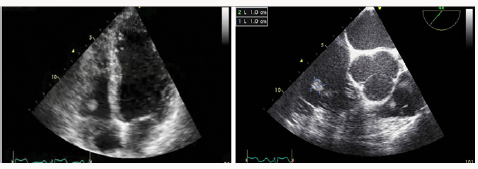
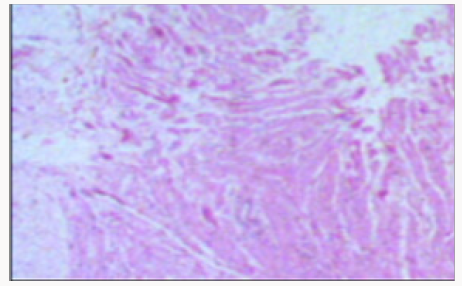
51-year-old man with a history of controlled hypertension and an active smoker, asymptomatic from a cardiovascular point of view who underwent a transthoracic echocardiogram during his routine checkup in his hometown. The exam revealed a mass attached to the tricuspid valve, and thus the patient was referred to our hospital for assessment. He was hemodynamically stable when he checked in at Hospital Militar Central (HMC), with no abnormal findings after physical examination and with normal range of laboratories and preoperative electrocardiogram values. After checking in at the HMC, the patient underwent a transesophageal echocardiogram to better characterize the lesion, which revealed a 11mm x 11 mm rounded, pedunculated mass of endocardial density in the lateral valve (Figure 1), without regurgitation and with preserved ejection fraction of the left ventricle (63%). The remainder of the description of this study was normal. Both the transthoracic and the transesophageal projection show a 11mm x 11 mm rounded, pedunculated mass of endocardial density in the anterior tricuspid valve. The subject underwent additional presurgical testing in the form of a coronary angiography, which revealed epicardial arteries without angiographically significant lesions. The patient’s case was submitted to the Board of Cardiology and to the cardiovascular surgery service, and it was concluded that he was suitable for surgery. The histopathological study of the sample taken in surgery was reported as papillary fibroelastoma type myxoid tissue mass of mesenchymal origin with a low degree of malignancy (Figure 2). The patient evolved without complications during the postoperative period and was discharged after 7 days of hospitalization.
Figure 1: Transthoracic (left) and transesophageal (right) echocardiogram.
Lupinepublishers-openaccess-Research-Reviews
Figure 2: Sample of resected mass.
Lupinepublishers-openaccess-Research-Reviews

Discussion

Heart tumors or masses are rare lesions that are documented parenthetically when performing a routine cardiac imaging. They can be classified into neoplastic and non-neoplastic tumors, the former being 20 to 50 times more frequent than primary tumors [1,7,8]. The prevalence of primary tumors is very low, being between 0.001 and 0.03% according to reports in autopsy series; as for neoplastic cardiac lesions, they can be found in about 18% of stage IV cancer patients [2-5]. Most primary heart tumors are benign, myxomas being the most frequent in adults, while rhabdomyoma is the most common in children. The third most frequent primary heart tumor in adults is the papillary fibroelastoma, which can be generated on any surface of the endocardium, being more commonly located in the heart valves. It makes up less than 10% of all cardiac tumors and is the most common valve tumor [5,8,9]. Papillary fibromyosarcomas are benign proliferations consisting of soft fibroblasts and variable collagenized stroma derived from the endocardium. They can occur at any age, but are more common in adults between 70 and 80 years. Over 90% of fibroelastomas occur in the heart valves, and close to 10% happen in non-valvular surfaces, such as the interventricular or interatrial septum [1,8]. From a clinical point of view, up to a third of patients are asymptomatic, so their diagnosis is mainly incidental in autopsies, in echocardiographic studies or during a cardiovascular surgery [10-12]. In the case of patients with symptoms, they are secondary to obstructive effects of the coronary ostium or to embolic events in pulmonary or systemic circulation due to detachment of mass fragments or accumulated thrombi that have also been described in cases of sudden death by embolization in coronary arteries and in cases of ischemic cerebrovascular events [1,8,13].
Regarding the findings in echocardiography, the lesions are usually located in the aortic valve, followed by the mitral valve, with a size between 2 and 40 mm, making them easier to detect in transesophageal echocardiograms. The overall mass is unique, with a short pedicle; it moves independently and it is attached to an endocardium surface. Given that the tumor has papillary extensions attached to the central pedicle, an image in the shape of a sea anemone is observed. Sometimes it is difficult to differentiate the lesion when it is attached to the valves when they are moving and when they are smaller than 2 mm [5,8]. Although the papillary fibroelastoma can be seen in the Computerized Axial Tomography and the Nuclear Magnetic Resonance, the echocardiogram is still the best image to evaluate these lesions since they are highly mobile and can be better seen in high resolution mode or zoom mode. Larger lesions may be accompanied by calcifications, which makes it easier to identify them [1,5]. The differential imaging diagnoses of this type of tumors include Lambal’s excrescences, which look more linear and are smaller, the vegetations that are usually accompanied by valve incompetence and destruction of the valve leaflets, thrombi and valve degenerative changes. Although these tumors are formed in the heart valves, the dysfunction of these structures is rare [5,8,10]. Treatment of benign primary tumors such as papillary fibroelastoma is surgical. Some authors suggest that, in the case of tumors on the left side, they should be resected in patients without high surgical risk if the size is greater than 1 cm or during another type of heart surgery. In the case of lesions on right side of the heart, they should only be resected if they are large or moving, and if they are associated with a hemodynamically significant obstruction or with a high risk of embolism due to short circuit from right to left [5,14]. Although a significant percentage of patients are asymptomatic, we suggest that those that meet the aforementioned criteria be resected, given the high risk of cerebrovascular events and death, aiming to use a technique that conserves the native valve [1,15]. If the patient does not have any symptoms or if the tumor is small, has no pedicle and is not moving, of if it is not possible to perform the surgical procedure due high surgical risk or due to the patient’s preference, we suggest antiplatelet therapy, even though there are few publications that support this recommendation [5,15].

Conclusion

Primary cardiac fibroelastoma of the papillary fibroelastoma type are rare masses that are usually found incidentally during routine exams conducted to frequently asymptomatic patients. The image that can best characterize this type of mass is the transesophageal echocardiogram and the recommended management is surgery, considering the risk of embolic events and the individual characteristics of both the patient and the tumor,

Ethical Responsibilities

Protection of people and animals. The authors declare that no experiments have been conducted on humans or animals for this research.
a. Data Confidentiality: The authors declare that they have followed the protocols of their work center on the publication of patient data. Right to privacy and informed consent. The authors declare that patient data does not appear in this paper.

To Read More Please Click on below link

For more LupinePublishers Open Access Journals Please visit our website: https://lupinepublishersgroup.com/

For more Medical Care Research and Review articles Please Click Here:

To Know More About Open Access Publishers Please Click on Lupine Publishers

Monday, February 25, 2019

Journal of Health Research and Reviews - Lupine Publishers

Heat wave killings in Pakistan and possible strategies to prevent the future heat wave fatalitie by Syed Zawar Shah in RRHOAJ- Lupine Publishers


There is near unanimous scientific consensus that greenhouse gas emissions generated by human activity will change Earth's climate. The recent (globally averaged) warming by 0.5°C is partly attributable to such anthropogenic emissions. Climate change will affect human health in many ways-most adversely. Heat waves are the most fatal type of weather situations and they happen irregularly in different countries. Heat waves are well-known in other countries but the people of Pakistan became familiar with it in 2010 when the extremely high temperature was recorded at Mohenjo-Daro, which was the hottest temperature ever recorded in Asia. After this incident heat waves again knocked the boundary of Pakistan in 2015 and at this time it caught attention because it resulted in a lot of deaths due to hyperthermia. Heat waves form when high pressure aloft become stronger and remains over a region for several days up to several weeks. Areas of high population having dense accommodation and poor people are at risk to the adverse effects of heat waves. Government should take steps to prevent deaths by investing in the electrical infrastructure. Besides this, public awareness is also important to minimize the loss- Lupine Publishers.


https://lupinepublishers.com/research-and-reviews-journal/fulltext/heat-wave-killings-in-pakistan-and-possible-strategies-to-prevent-the-future-heat-wave-fatalities.ID.000113.php

https://lupinepublishers.com/research-and-reviews-journal/pdf/RRHOAJ.MS.ID.000113.pdf

https://lupinepublishers.com/research-and-reviews-journal/abstracts/heat-wave-killings-in-pakistan-and-possible-strategies-to-prevent-the-future-heat-wave-fatalities.ID.000113.php 


For more Lupine Publishers go through the below link

For more Journal of Health Research and Reviews click on below link


Thursday, February 21, 2019

Journal of Health Research and Reviews - Lupine Publishers


Therapeutic recombinant interferons and cytokines are being used to treat different diseases but these proteins can start immunogenic reactions. These reactions neutralize the effect of therapeutic proteins and make them useless. There are many factors responsible for causing and effecting immunogenicity including dosage, route of administration, genetic status, and polymorphism and Allergic responses. The body's first immune response against recombinant therapeutic cytokines is mediated by innate system, subsequently activating the adaptive immune system. The key factors in immunogenicity are the glycosylation and aggregated structure of therapeutic protein that distinguishes the protein/cytokine from self-proteins. There are many ways to reduce immunogenicity like to decrease the number of epitopes for T-cells or by screening the history of allergies. IFNs are basically proteins in nature many of which are related both in 3D structure and amino acid sequences. Recombinant Interferons are widely used these days against viral infections and cancers. In this review the antiproliferative activity and the effects of various recombinant human interferons on the cytotoxic and cytostatic activity of natural killer cells and monocytes are discussed in detail- Lupine Publishers.


For more Lupine Publishers go through the below link

For more Journal of Health Research and Reviews click on below link

Wednesday, January 2, 2019

Gender difference in learning disabled children Neuropsychological Review(RRHOAJ)-Lupine Publishers


This review aimed to investigate the gender differences in learning disabilities among children. It is highlighted the nature of learning disabilities, and reviewed the gender differences on one hand, and explanation of theoretical background on the other hand. Finally, it is centred on the neuropsychology of these complicated behavioral phenomena. The conclusion of this article is that we are in the midst of investigating differences between male and female from multidimensional and methodological approaches because there are some critical issues regarding the assessing this complicated behavioural phenomena.

For more Information Click on the below Links..


For moreLupine Publishers Open Access Journals Please visit our website:http://www.lupinepublishers.com/
Please Click Here:http://www.lupinepublishers.com/research-and-reviews-journal/


Friday, December 28, 2018

To Examine the Relationship and Strength of Alcohol- Related Intimate Partner Violence in sub-Saharan Africa (RRHOAJ)-Lupine Publishers


Alcohol-related intimate partner violence (IPV) is a serious public health issue which has attracted a lot of research and debates. While some studies have reported the relationship between alcohol and IPV to be linear, others have reported threshold effects. While some studies have found the link to be strong, others have reported weak or no association. Using Logistic regression and meta-analysis, the relationship, strength of relationship and possible moderators of the alcohol-IPV link are investigated in ten sub-Saharan African countries. The results indicates that while alcohol consumption is associated with IPV in three of the countries, alcohol abuse was associated with IPV in the other seven countries lending support for both the linear and threshold effects in sub-Saharan Africa. The meta-analysis showed a strong association between alcohol and physical IPV while a weaker association was observed for the alcohol- sexual IPV link. Moderator analysis showed that the strength of the alcohol-IPV link in sub-Saharan Africa varies with wealth index, marital length, and marital status, and jealousy, place of residence and justification of the use of violence. The nature of moderation was different between countries. The results of this study can be applied to plan country specific and multi-faceted intervention programs.


For more Lupine Publishers Open Access Journals
Please visit our website: http://www.lupinepublishers.com/


Thursday, December 27, 2018

Immunogeneicity of Recombinant Therapeutic Interferon Alpha(RRHOAJ)-LupinePublishers


Therapeutic recombinant interferons and cytokines are being used to treat different diseases but these proteins can start immunogenic reactions. These reactions neutralize the effect of therapeutic proteins and make them useless. There are many factors responsible for causing and effecting immunogenicity including dosage, route of administration, genetic status, and polymorphism and Allergic responses. The body's first immune response against recombinant therapeutic cytokines is mediated by innate system, subsequently activating the adaptive immune system. The key factors in immunogenicity are the glycosylation and aggregated structure of therapeutic protein that distinguishes the protein/cytokine from self-proteins. There are many ways to reduce immunogenicity like to decrease the number of epitopes for T-cells or by screening the history of allergies. IFNs are basically proteins in nature many of which are related both in 3D structure and amino acid sequences. Recombinant Interferons are widely used these days against viral infections and cancers. In this review the antiproliferative activity and the effects of various recombinant human interferons on the cytotoxic and cytostatic activity of natural killer cells and monocytes are discussed in detail.


For more LupinePublishers Open AccessJournals Please visit our website:http://www.lupinepublishers.com/


Lupine Publishers: Lupine Publishers| A Standard Pediatric Dental Clinic

Lupine Publishers: Lupine Publishers| A Standard Pediatric Dental Clinic :  Lupine Publishers| Journal of Dentistry and Oral Health Care Aft...